




we help people protect and transfer their wealth
CHOOSE A TOP ST. LOUIS LAW FIRM
We concentrate our practice in the areas of Estate Planning, Trust Administration, Probate, Asset Protection and Business Law.
Our goal is to serve our clients in such a manner so that they feel comfortable referring us to their family and friends.
We charge reasonable fees that are tailored to our client’s needs.
Our attorneys have more than 5 decades of combined experience helping our clients.
Our staff responds promptly to all client communications, whether by phone, email or through our secure client portal.
All of our clients receive personalized attention based upon their unique situation.






Gregory E. Robinson, P.C.
Additional Types of Trusts
The living trust typically forms the foundation of most estate plans. There are, however, many additional types of trusts which can be drafted and utilized depending on the specific situation. These additional trusts include, but are not limited to:
- Special Needs Trust
- Charitable Lead Trust
- Charitable Remainder Annuity Trust
- Charitable Remainder Unitrust (CRUT)
- Standard Unitrust
- Net Income Unitrust
- Net Income with Makeup Unitrust
- Grantor Retained Income Trust
- Grantor Retained Annuity Trust
- Missouri Asset Protection Trust
- Qualified Personal Residence Trust
- Qualified Terminable Interest Property Trust (Q-TIP)
If you have questions concerning trusts, please feel to contact one of the Missouri licensed attorneys at the offices of Gregory E. Robinson, P.C., at 636-532-9500.
SCHEDULE CONSULTATION
Missouri Uniform Trust Code (MUTC)
Missouri enacted its version of the Uniform Trust Code, known as the Missouri Uniform Trust Code (MUTC) on January 1, 2005, and it is contained in Sections 456.101 RSMO to 456.11-1106 RSMO. To create a valid trust under the MUTC, Missouri law provides in part that a trust is created only if: (1) the grantor has capacity to create a trust; (2) the grantor indicates an intention to create the trust; (3) the trust has a definite beneficiary or is: (a) a charitable trust; (b) a trust for the care of an animal or (c) a trust for a non-charitable purpose; (4) the trustee has duties to perform; and (5) the same person is not the sole trustee and sole beneficiary.
The MUTC sets forth the capacity requirement to create a trust which states that the capacity required to create, amend, revoke, or add property to a revocable trust, or to direct he actions of the trustee of a revocable trust, is the same as that required to make a will.
SCHEDULE CONSULTATION
Why Living Trusts Are So Effective
A living trust is an extremely flexible estate planning tool and be used for a number of reasons. Sometimes a living trust is used as a will substitute in order to avoid the expense and delay of probate. Unlike a will, a living trust is a private document. A will is a public document and a copy of it can usually be obtained from the local probate court. A trust, however, is a private document and is not typically filed with the probate court. If title to the asset has been transferred into a living trust, that asset would avoid the probate process upon the death of the grantor.
The key to making a trust work is the transfer of title of the assets to the trustee. When the grantor of the trust creates a trust and transfers the title of the assets to the trustee, upon the grantor’s passing, the successor trustee holds title on behalf of the beneficiaries and the assets titled in the trust do not have to pass through probate.
A living trust is an especially effective vehicle when an individual owns real estate in two different states. By transferring the title to the real estate in both states to the trustee, the grantor avoids probate in the state in which he or she resides, as well as the state where the other property was owned.
Another common reason for using a living trust is to protect against a probate conservatorship proceeding upon the disability of the grantor. For example, if an individual creates a living trust and then subsequently has a stroke and becomes disabled and unable to manage his or her financial affairs, the assets in the trust can be managed by the successor trustee – not by a court appointed conservator. The assets are not owned in the grantor’s individual capacity, but rather, by the trustee, or successor trustee, of the grantor’s trust. Upon the grantor’s disability, the successor trustee assumes the trusteeship and manages the assets in the trust for the benefit of the grantor and consequently, the assets titled in trust can avoid the delay and expense of a court imposed conservatorship.
Another common reason for creating a living trust is to hold assets in the trust upon the grantor’s passing for the benefit of minor children or grandchildren. Creating a trust and choosing a successor trustee who will manage the assets for the minor children or grandchildren allows the grantor to provide for the beneficiaries’ college expenses, and their health, maintenance, support and the trust can also be drafted to provide for advanced educational degrees.
Additionally, by holding the assets in trust after the grantor’s passing and incorporating a spendthrift provision in the trust allows the assets in the trust to be protected against the beneficiaries’ creditors and their spendthrift propensities. Missouri law provides that the interest of a beneficiary which is held subject to a “spendthrift trust,” is sufficient to protect the assets from the creditors of the beneficiaries.
As individuals age it is also quite common for a parent to establish a living trust and name a son or daughter to serve as a co-initial trustee. The son or daughter named as a co-initial trustee will assist the parent with the management of the assets and the payment of the parent’s liabilities.
SCHEDULE CONSULTATION
The Living Trust Team
There are three separate positions on the living trust team and typically, the individual creating the living trust will initially serve in all three positions. The three positions on the trust team are the grantor, the trustee and the beneficiary.
The grantor is the individual who creates the trust and sets forth the instructions in the trust and determines who is to ultimately receive the assets upon the grantor’s passing.
The trustee is the individual responsible for carrying out the terms contained in the trust. When a grantor creates a living trust, the grantor will typically name him or herself as the initial trustee. The grantor will also name a successor trustee to manage and distribute the assets upon the grantor’s disability or death. The successor trustee has a fiduciary responsibility to carry out the terms of the trust.
The last position on the trust team is that of the beneficiary. The beneficiary is the individual who benefits from the assets in the trust. The grantor also typically names him or herself as the initial beneficiary of the trust.
When an individual creates a living trust, the individual initially occupies all three positions; the individual creates the trust as the grantor, manages the trust assets as the trustee and is the initial beneficiary of the assets. Upon the grantor’s passing, the successor trustee assumes the responsibility for carrying out the terms of the trust and for transferring the assets of the trust to the ultimate beneficiaries pursuant to the terms set forth in the trust instrument.
The creation of a living trust and the transfer of assets into the trust do not result in a separate tax return being filed – all the income is still reported on the same IRS Form 1040. A living trust is revocable by the grantor and it can be changed or amended at any time, as long as the grantor has the requisite mental capacity required to amend the trust.
SCHEDULE CONSULTATION
Why A Trust?
The trust can trace its existence back to early English common law and the English courts of chancery. Originally the English jurisprudence system consisted of two separate courts, courts at law and at equity. The chancery courts were courts at equity that administered equitable relief to the plaintiff. Over the course of many years the trust developed into a remarkably flexible document.
The genius behind the creation of a trust is the concept that one party, the trustee, holds title for the benefit of another party, the beneficiary. The concept was that the trustee holds the legal title and the beneficiaries hold the equitable title. The division of the legal and equitable titles forms the basis of many trust law decisions over the centuries.
Just as a key is necessary to start a car engine, the key to getting a trust started and running is the transfer of the title to the trustee. An inter vivos, or living trust, is an extremely popular and effective estate planning document and for many, forms the foundation of their estate plan.
SCHEDULE CONSULTATION
Page 1 of 2
Warning: Illegal string offset 'active' in /home/kexitnck/public_html/templates/corpway/html/pagination.php on line 90
Warning: Illegal string offset 'active' in /home/kexitnck/public_html/templates/corpway/html/pagination.php on line 96
Warning: Illegal string offset 'active' in /home/kexitnck/public_html/templates/corpway/html/pagination.php on line 90
Warning: Illegal string offset 'active' in /home/kexitnck/public_html/templates/corpway/html/pagination.php on line 96
Meet Your Team
 Gregory Robinson - Attorney
Gregory E. Robinson is a small firm practitioner. He received his Bachelor’s Degree from Brigham Young University and his Juris Doctor from the University of Missouri-Columbia. Greg is a member of the Business Law Committee and the Probate and Trust Committee of the Missouri Bar Association. He is also a member of the Bar Association of Metropolitan St. Louis.
READ FULL BIO Jacqueline Moore - Attorney
Jacqueline Moore joined the law firm of Gregory E. Robinson, P.C., as an Associate in February of 2015. Jacki obtained her Bachelor of Arts degree in Sociology/Criminal Justice from Northern Illinois University and her Juris Doctorate from Washington University in St. Louis, School of Law. Jacki was admitted to the Missouri Bar in 1991 and to the Illinois Bar in 1992, although she no longer actively practices in Illinois.
READ FULL BIO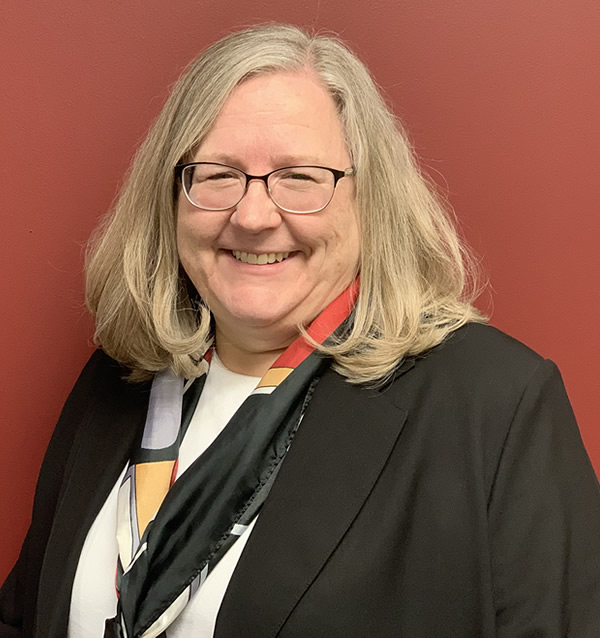 Brenda Moore - Paralegal
Brenda brings 10 years of office administration experience to the offices of Gregory E. Robinson, P.C. With a professional focus on communication and customer service, so client care is an important area of emphasis for her.
READ FULL BIO Jenna Robinson
Jenna graduated cum laude from Brigham Young University-Hawaii (BYU-H) in June of 2023, with a Bachelor’s of Science in Psychology with an emphasis in Legal Studies and Criminal Justice. During her time at BYU-H, she worked as an English Teacher’s Assistant and as a Student Tutor at the Reading and Writing Center.
READ FULL BIO
Request A Consultation
Want to schedule a time to speak with an attorney? Great, we would love to meet you.
Follow Us
We invite you to follow us on social media:


Office Location
670 Mason Ridge Center Drive
Suite 125
St. Louis, MO 63141
TEL: 636-532-9500
Disclaimer
The choice of a lawyer is an important decision and should not be based solely on advertisements. Neither the Supreme Court of Missouri nor The Missouri Bar reviews or approves certifying organizations or specialist designations.
The information presented in this website by Gregory E. Robinson, P.C. is intended as general information and is not legal advice. You should contact an attorney to learn how the law applies to your specific situation. We welcome your phone calls as well as electronic inquiries.
Use of this web site, communicating through this web site or use of electronic email does not create an attorney-client relationship. Email is not a secure form of communication, please do not send confidential or sensitive information.
The information in this web site is not guaranteed to be correct, complete, or current. We make no warranty, expressed or implied, about the accuracy or reliability of the information at this website or at any other website to which this site is linked.
Images on the site include simulated portrayals of lawyers, clients, scenes and events.
The copyrights in all text, images, screens and other materials provided on this Site are owned by Gregory E. Robinson, P.C., and/or by third parties.